Building Modern Enterprise Insurance Portals with Laravel & Next.js
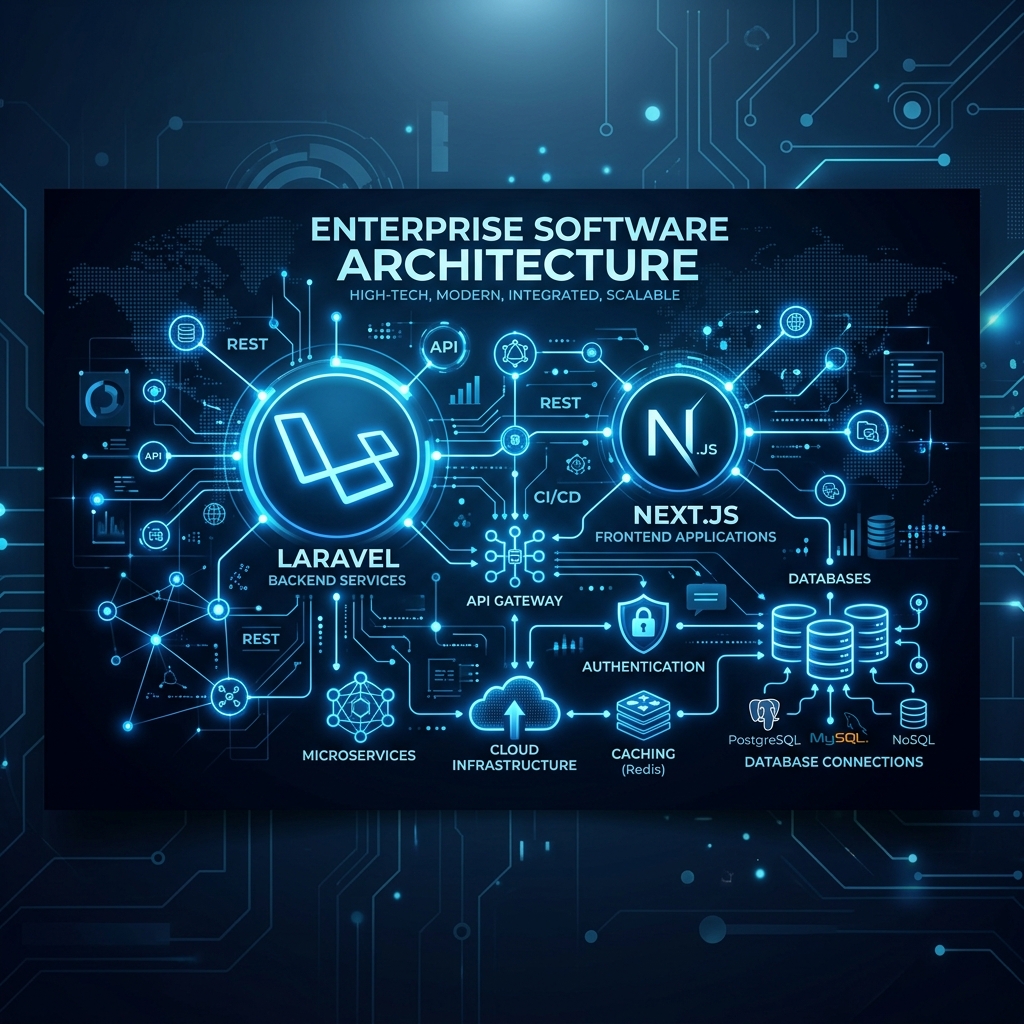
Architecting high-availability, secure web portals for insurance operations combining Laravel REST APIs, Next.js static exports, and Oracle DB integration.
Introduction
In the life insurance industry, web portals serve as the central backbone connecting policyholders, field agents, underwriters, and corporate administration. Security, data integrity, and high availability are non-negotiable requirements.
Over the past several years managing ICT operations at Protective Islami Life Insurance and NRB Islamic Life Insurance, I have designed and deployed decoupled portal architectures that combine the enterprise robustness of Laravel backends with the rapid speed and security of Next.js static web frontends.
Key Architectural Principles
1. Decoupled Frontend & Backend
Instead of monolithic Blade rendering, separating the UI layer into a Next.js application provides:
- Static Export Speed: Static HTML/JS bundles deployed on high-speed servers or shared hosting cPanel (
public_html) without server process overhead. - Enhanced Security: The web frontend does not directly expose internal application database connection strings or server environments.
- RESTful API Standardization: A centralized Laravel API layer handles authentication (Sanctum/JWT), business logic validation, and database transactions.
[ Next.js Client ] <--- HTTPS / JSON REST API ---> [ Laravel API Gateway ] <---> [ Oracle / SQL Server DB ]
2. High-Performance Oracle & SQL Server Integration
Life insurance core systems rely heavily on Oracle Database and Microsoft SQL Server. Connecting Laravel to legacy Oracle schemas required tailored query optimization and cached view materialization:
// Example: Cached Policyholder Summary Query
public function getPolicySummary($policyNo)
{
    return Cache::remember("policy_summary_{$policyNo}", 3600, function () use ($policyNo) {
        return DB::connection('oracle')
            ->table('POLICY_MASTER')
            ->where('POLICY_NO', $policyNo)
            ->first();
    });
}
Results & Impact
- 99.9% Portal Availability: Zero downtime during peak monthly premium collection cycles.
- Sub-Second Page Loads: Next.js static site generation reduced average page load times to under 300ms.
- Enterprise Security Compliance: Full audit logging, encrypted payload transfers, and strict RBAC (Role-Based Access Control).
Conclusion
Combining Laravel and Next.js offers the ideal balance of developer productivity, robust database connectivity, and lightning-fast user experience for enterprise applications.
For questions on system architecture or technical inquiries, feel free to reach out via Contact Me.